
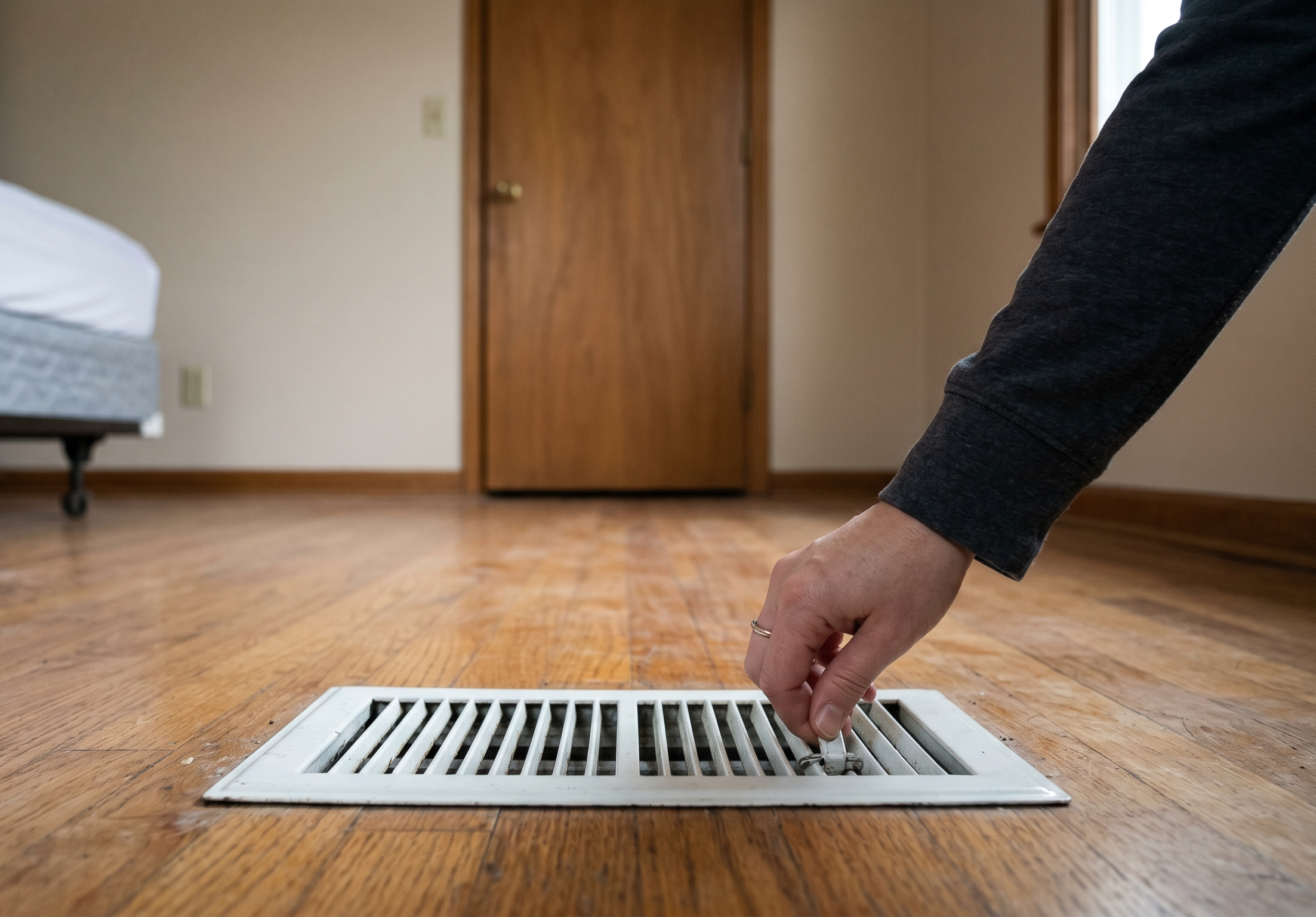
Should You Close Vents in Unused Rooms? Why This Common Habit Hurts Your HVAC System
You have a guest room that nobody uses for months at a time, so you close the vent to stop wasting conditioned air in there. More airflow to the rooms you actually use, lower energy bills, problem solved—right?
Wrong. And it’s a mistake our Cherry Hill technicians at Fresh Air Flow see the consequences of more often than you’d think.
Closing vents in unused rooms doesn’t help your HVAC system work smarter. It creates a chokepoint that forces your system to work harder, and over time, the damage adds up.
TL;DR
Closing vents in unused rooms creates pressure buildup inside your ductwork that stresses your equipment, causes leaks, and reduces efficiency throughout the entire system. Keep your vents open and talk to a professional if certain rooms are consistently uncomfortable.
The Myth: Closing Vents Sends More Air Where You Need It
The logic behind this HVAC myth is understandable. If you block airflow to one room, that air has to go somewhere else. Unfortunately, that’s not how your HVAC system works.
Your system was designed to move a specific volume of air across your home. The blower motor, ductwork, and equipment are all sized with that airflow in mind. When you close a vent, the system doesn’t detect that change and redistribute the air elsewhere. It keeps pushing the same volume of air through a network that now has fewer places for it to go.
The result isn’t better airflow in your living room. It’s increased HVAC airflow problems.
What Happens When You Close a Vent
Your HVAC system operates within a specific pressure range. When vents are closed, and that pressure rises beyond what the system is built to handle, a chain reaction begins.
- Duct leaks develop
- Your blower motor strains
- The heat exchanger can overheat and crack
- Efficiency drops, not rises
Why Some Rooms Feel Uncomfortable No Matter What
If you’re tempted to close vents because certain rooms are always too hot or too cold, the vent itself isn’t the problem—it’s a symptom of something worth investigating.
Persistent comfort imbalances between rooms are usually caused by one of the following:
- Ductwork issues
- Blocked or dirty vents
- An undersized or aging system
- Poor home insulation
- Imbalanced airflow
Closing a vent is a workaround that doesn’t address any of these root causes. It just adds a new problem on top of the existing one.
What HVAC Zoning Is
If the idea of controlling airflow room by room sounds appealing, you should consider HVAC zoning.
A zoning system uses motorized dampers inside your ductwork, controlled by multiple thermostats or sensors, to direct conditioned air to specific areas of your home. Unlike manually closing a vent, zoning works within the system’s pressure limits and doesn’t create the chokepoints that manual vent closing does.
For homes where certain areas have different heating and cooling needs, zoning is the right tool for the job. A ductless mini split system is another effective option for spaces that need independent climate control without adding ductwork.
If you’ve been closing vents trying to solve a comfort problem, a conversation with one of Fresh Air Flow’s Cherry Hill technicians about zoning may be exactly what you need.
How to Balance HVAC Airflow in Your Home
Rather than closing vents, here are approaches that genuinely help with balancing HVAC airflow without damaging your system:
- Keep all vents fully open
- Have your ductwork inspected
- Check that supply and return vents are unobstructed
- Schedule regular HVAC maintenance
- Ask about zoning options
FAQs
Does closing vents save energy?
No. Closing vents increases pressure inside your ductwork, forces your blower motor to work harder, and usually leads to duct leaks that waste far more energy than you’d save by blocking a single room.
How do air vents work in an HVAC system?
Supply vents deliver conditioned air from your HVAC system into each room. Return vents pull air back to the system to be filtered, conditioned again, and recirculated. Both sides of this loop need to remain open and unobstructed for the system to operate correctly.
What should I do if one room is always hotter or colder than the rest?
Don’t close vents in other rooms to compensate. Instead, have a technician evaluate the room in question. The cause is usually a ductwork issue, an airflow imbalance, or an insulation problem.
Is HVAC zoning worth it?
For homes with multiple stories, additions, or rooms that consistently run warmer or cooler than the rest of the house, HVAC zoning can be a worthwhile investment that pays off in comfort and efficiency. Fresh Air Flow can assess your home’s layout and heating and cooling needs to determine whether zoning makes sense for your situation.
Stop Closing Vents and Start Solving the Real Problem!
If you’ve been closing vents hoping to improve comfort or cut costs, the best thing you can do right now is open them back up. Then, if you’re still dealing with rooms that don’t feel right, give us a call.
Fresh Air Flow serves Cherry Hill and the surrounding communities across South Jersey and the Greater Philadelphia area. Our technicians treat underlying symptoms so your system runs the way it was meant to. We offer same-day service, 24/7 availability, and a 100% satisfaction guarantee on everything we do. Schedule your appointment today!