
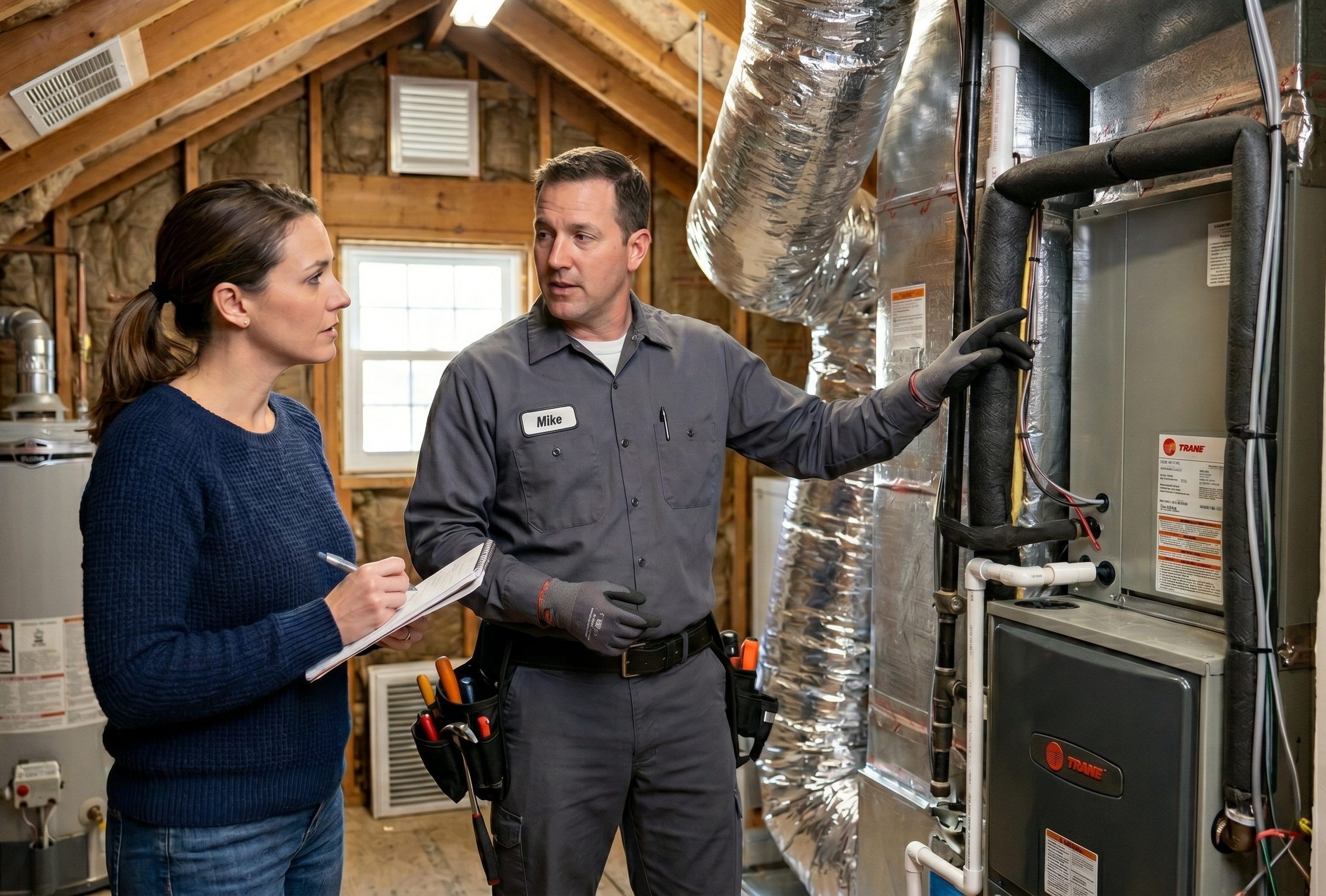
HVAC System Myths That Are Costing Homeowners Money in 2026
Some of the most widely repeated heating and air conditioning beliefs aren’t just outdated—they’re wrong. If you’ve been running your heating and cooling systems based on advice you heard years ago, there’s a good chance you’re wasting energy, shortening your equipment’s lifespan, or setting yourself up for a costly repair.
Fresh Air Flow has served homeowners and businesses across Cherry Hill and the surrounding area for years, and our HVAC technicians hear these same myths on almost every service call. Here’s the truth behind the most damaging ones.
TL;DR
Common HVAC myths—like closing vents to redirect airflow, cranking your thermostat to heat or cool faster, or skipping maintenance on a new system—cost homeowners real money.
Key Takeaways
- Closing vents creates dangerous pressure buildup in your ductwork
- A brand-new HVAC system still needs regular maintenance from day one
- Your thermostat works at one speed; changing the temperature setting more aggressively won’t speed anything up
- Duct leaks silently drain energy and money every month
Myth #1: Closing Vents in Unused Rooms Sends More Air to the Rest of the House
This is one of the most common misconceptions we encounter during service calls in Cherry Hill and throughout South Jersey. The logic seems reasonable. If a room isn’t being used, why not shut the vent and push that conditioned air somewhere else?
Here’s the problem: your HVAC system was designed and balanced to distribute air across every vent in your home. When you close vents, the air doesn’t reroute. It has nowhere to go.
Instead, pressure builds up inside the ductwork. That pressure forces air through any gaps, cracks, or weak points it can find. This causes duct leaks, reduces efficiency, and makes your system work harder than it needs to. That excess pressure can damage the blower motor, crack duct seams, and reduce overall airflow throughout the entire ventilation system.
We’ve walked into homes where residents had been closing vents for years, thinking they were saving money. Instead, they had uneven temperatures, elevated energy bills, and ductwork that needed professional sealing.
What to do instead: Leave all vents open. If certain rooms feel consistently warmer or cooler than others, that’s a sign of an underlying airflow or ductwork issue.
Myth #2: A New HVAC System Doesn’t Need Maintenance Right Away
We hear this one frequently, especially after completing an HVAC installation.
Every HVAC system accumulates dust, operates through seasonal stress, and undergoes wear from regular use. Filters need to be changed. Coils collect debris. Refrigerant levels can shift. Electrical connections should be checked.
Even a system installed six months ago benefits from a professional inspection before peak heating or cooling season.
There’s also the warranty side to consider. Many manufacturer warranties, including those on Carrier equipment, require documented maintenance to remain valid. Skipping service can void the coverage you’re depending on.
Our Cherry Hill customers who enroll in a Fresh Air Flow HVAC maintenance plan get scheduled tune-ups that keep their systems performing at full efficiency year-round. We also make follow-up calls after every visit to confirm everything is running the way it should.
The truth: HVAC maintenance isn’t something you can skip because your system is new. It’s something you start doing from day one to protect your investment.
Myth #3: Setting the Thermostat Higher (or Lower) Makes Your Home Heat or Cool Faster
This myth is so persistent that we almost expect to hear it. A homeowner comes back to a warm house in August and cranks the thermostat all the way down to 65°F, assuming the air conditioning system will blast cold air to compensate and cool the home faster.
It doesn’t work that way.
Your thermostat is a trigger that tells your HVAC system to turn on or off based on the temperature you set. Once the system is running, it runs at the same speed regardless of whether you set it to 68°F or 60°F. Setting it to an extreme temperature doesn’t increase output. It just means the system will run longer and overshoot your actual comfort target before it shuts off.
The same applies to home heating systems in winter. Bumping the thermostat up to 80°F when you want it to be 72°F just leaves you sweating before scrambling to turn it down.
This habit causes unnecessary wear on your equipment, higher energy bills, and temperature swings that reduce overall comfort.
What to do instead: Set your thermostat to the exact temperature you want. If your home consistently takes too long to reach that temperature, there may be an underlying issue with your system efficiency, insulation, or airflow.
Myth #4: Duct Leaks Are Actually Beneficial Because They Add Airflow
Duct leaks are one of the most costly and avoidable sources of energy loss in any home.
When your heating and cooling systems push conditioned air through the ductwork, that air is supposed to arrive at the supply vents in your living spaces. Leaks divert that air into unconditioned areas before it ever reaches the rooms you’re actually trying to heat or cool. Your system then has to run longer and work harder to compensate, driving up energy costs and accelerating wear on components.
In homes across Cherry Hill and South Jersey, duct leaks are a leading cause of the “hot and cold room” complaints we receive. The system is running; the air just isn’t getting where it needs to go.
Beyond efficiency, leaky ductwork can pull in dust, allergens, and humidity from unconditioned spaces and distribute them throughout your home—directly affecting indoor air quality.
What to do instead: If you suspect duct issues—especially if certain rooms never reach the right temperature—have a technician inspect and seal your ductwork. It’s one of the highest-return maintenance investments you can make.
FAQs
How often should I schedule HVAC maintenance?
While there are DIY maintenance tasks you can handle yourself, most heating and cooling systems benefit from professional maintenance twice per year—once before the cooling season in spring, and once before the heating season in fall. If you have a heat pump, which handles both heating and cooling, consistent bi-annual service is important. Fresh Air Flow offers HVAC maintenance plans that make it easy to stay on schedule.
Does closing vents in my home actually save energy?
No. Closing vents creates pressure imbalances in your ventilation system that force your HVAC equipment to work harder. This can cause duct leaks, blower motor strain, and higher energy bills—the opposite of what you’re trying to achieve. Leave your vents open and consult a technician if you have rooms with persistent comfort issues.
How do I know if my HVAC system needs repair or full replacement?
Age, repair frequency, and efficiency are the main factors. Most air conditioning systems and home heating systems last 15 to 20 years with maintenance. If your system is older, requires frequent AC repair or furnace repair, or drives up energy costs, HVAC replacement may be more cost-effective. Our Cherry Hill technicians can evaluate your system and give you an honest recommendation.
Can a mini split system work for my whole home?
A ductless mini split system is an excellent solution for homes without existing ductwork, additions, sunrooms, or areas where traditional duct runs aren’t practical. Fresh Air Flow was one of the first companies to introduce mini split systems to the Cherry Hill area, and our team has extensive experience designing and installing them to cover entire homes. We can assess whether it’s the right fit for your specific situation.
Stop Letting Myths Cost You Money—Talk to Fresh Air Flow!
Bad HVAC advice has a real cost—higher energy bills, premature equipment failure, voided warranties, and comfort problems that never quite get resolved.
At Fresh Air Flow, our team has the experience, certifications, and commitment to do the job right the first time. We’re available 24/7, offer same-day service, and back every repair with a two-year warranty. Whether you need a routine tune-up, an emergency visit, or an honest assessment of your system’s condition, we’ll be there.
We put our soul in climate control. Call Fresh Air Flow today to schedule your service!