
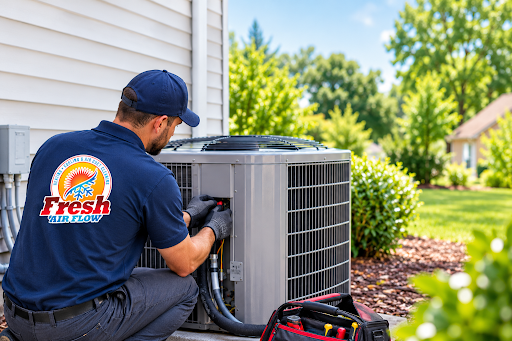
Common AC Installation Mistakes to Avoid
Fresh Air Flow is here to share common AC installation mistakes to avoid in Cherry Hill, NJ. Installing a new air conditioner helps your home stay cool, control energy costs, and improve indoor comfort during the hot New Jersey summer.
The quality of the installation plays a major role in how well your system performs. Mistakes with equipment sizing, refrigerant levels, airflow, or electrical connections reduce efficiency and shorten the life of your investment. Learn more below about which AC installation mistakes to watch for and why professional setup matters.
Key Takeaways for a Better AC Installation
- Accurate sizing helps maintain even temperatures and comfortable humidity levels.
- The correct refrigerant charge supports efficient cooling and dependable operation.
- Clean filters, properly sized ducts, and clear outdoor space help your system work effectively.
- Technicians handle electrical work, refrigerant connections, permits, and safety checks.
- Testing the new system helps confirm that each component works as intended.
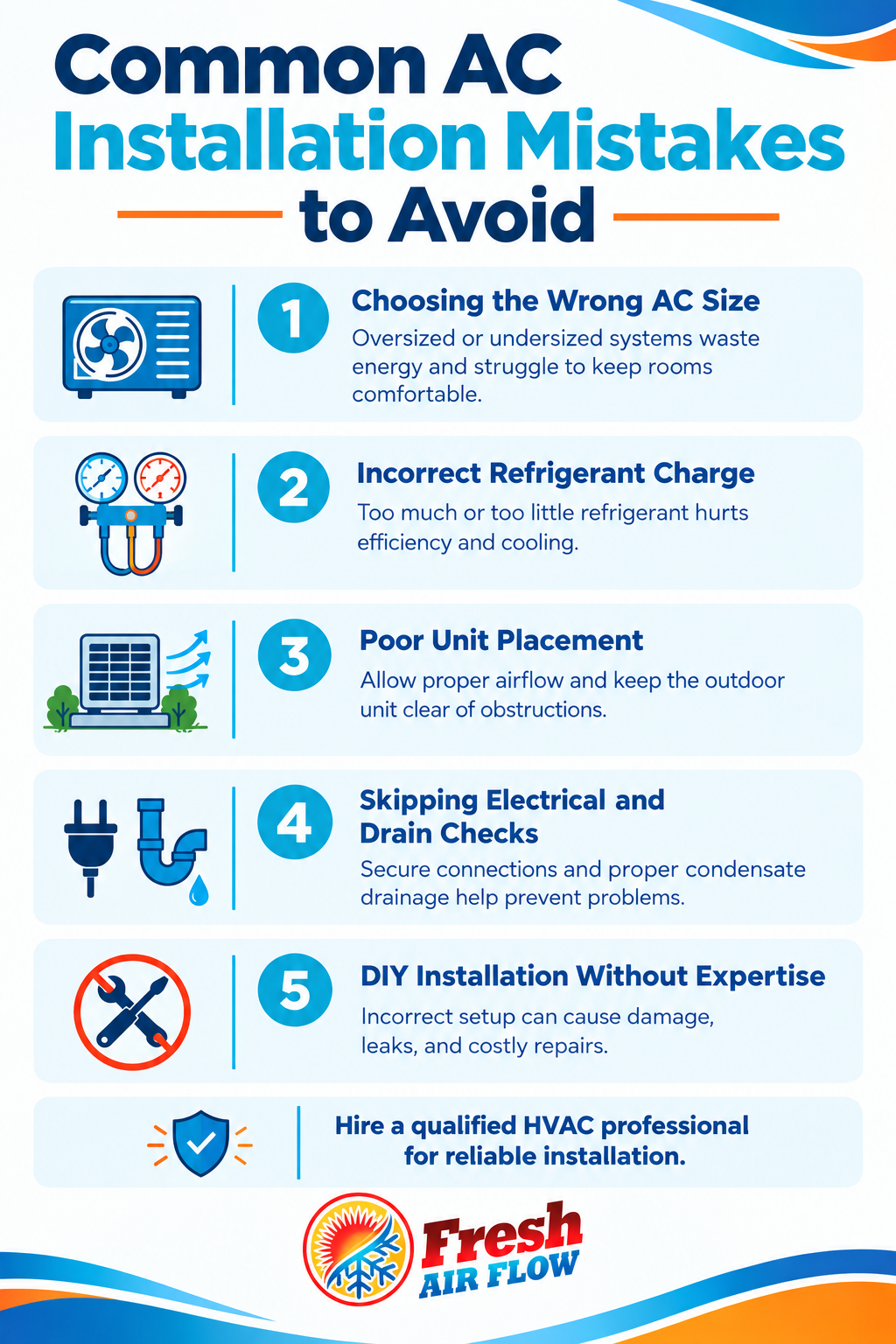
1. Choosing the Wrong AC Size
One of the most common HVAC installation mistakes involves choosing an air conditioner that is too large or too small for the home. Sizing errors show up in three ways:
| Sizing Error | What Happens |
| Oversized Equipment | An oversized AC may cool rooms quickly and shut off before removing enough moisture from the air. Short cycling can also increase wear on system components. |
| Undersized Equipment | A system with too little capacity may run for long periods on hot days without reaching the thermostat setting. This can increase energy use and leave rooms feeling warm. |
| Skipping a Load Calculation | Guessing based on square footage alone can lead to poor equipment selection. An installer can complete a Manual J load calculation to help ensure the system is properly sized for the home. |
2. Getting the Refrigerant Charge Wrong
Refrigerant transfers heat from inside your home to the outdoors. The correct AC refrigerant charge helps your system cool effectively, control energy use, and protect important components. Here’s what technicians must avoid during an AC installation:
- Setting the Wrong Charge — An incorrect charge can reduce cooling performance and place extra stress on the compressor. A qualified technician uses precise measurements and manufacturer specifications to set the charge. Carrier units ship charged for 15 feet of line set, so any other length needs an adjustment on site.
- Ignoring Refrigerant Lines — Damaged, dirty, or improperly sized lines can affect system performance. Installers should select suitable lines, make secure connections, and follow the manufacturer’s requirements.
- Skipping Leak Checks — Refrigerant connections need careful inspection before the system goes into service. Testing helps identify leaks and supports reliable operation.
3. Overlooking Airflow and Ductwork
Even a high-quality air conditioner needs good airflow to cool your home evenly. Restricted ducts, poor return-air placement, and incorrect blower settings can reduce comfort and system efficiency. A complete installation should avoid these airflow and ductwork mistakes:
- Leaving Ducts Unchecked — Leaky or poorly sized ducts can waste cooled air before it reaches your living spaces. An installer should check accessible ductwork and recommend needed repairs.
- Ignoring the Air Filter — The wrong filter or a clogged filter can restrict airflow. Use a filter that matches the system’s specifications and replace it on the recommended schedule. Carrier recommends replacing 1-inch filters every 30 to 90 days and 4-inch media filters every six to twelve months.
- Placing the Outdoor Unit Poorly — The condenser needs adequate clearance for airflow and service access. Keep obstructions away from the unit according to manufacturer guidelines. Carrier requires 24 inches at the service end and 48 inches overhead, with 12 inches on remaining sides. Exact clearances vary by model.
4. Attempting a DIY AC Installation
Installing an air conditioner involves electrical connections, refrigerant handling, equipment matching, drainage, and local code requirements. A DIY installation can create the following safety concerns or leave these important setup steps unfinished:
- Missing Electrical Requirements — An AC system needs properly rated wiring, circuit protection, and a suitable disconnect.
- Incorrect Equipment Connections — Loose connections, poor drainage, or careless refrigerant-line work can affect performance.
- Overlooking Permits — Some installations require permits and inspections under local rules. Ask your contractor to confirm the requirements for your home before work begins.
5. Skipping Final Testing and Setup
A new air conditioner needs more than a successful power-on to deliver reliable comfort. The installer should verify operation, check airflow, confirm thermostat settings, and inspect the system for correct drainage and safe operation. These steps help catch the following setup issues:
- Leaving the Thermostat Unconfigured — Incorrect settings or poor placement can cause uneven cooling. Your technician should explain the controls and confirm that the thermostat communicates adequately with the system.
- Failing to Test Performance — A system that runs may still have airflow, drainage, or refrigerant issues. Startup testing helps confirm that the installation follows manufacturer specifications.
- Skipping Homeowner Guidance — Knowing how to replace filters, set schedules, and recognize unusual operation makes routine care easier.
Frequently Asked Questions
How can I tell if my AC was installed incorrectly?
Warning signs may include weak airflow, uneven temperatures, unusual noises, water leaks, or an air conditioner that struggles to cool your home. Contact a qualified HVAC technician to inspect the system rather than attempting refrigerant or AC repair yourself.
How long does professional AC installation take?
Many standard AC installations can be completed in one day. The timeline depends on equipment type, ductwork changes, electrical upgrades, permit requirements, and the complexity of the project.
What should an AC installation checklist include?
An AC installation checklist should cover the following:
- Equipment sizing
- Matched indoor and outdoor components
- Refrigerant-line installation
- Electrical safety
- Condensate drainage
- Airflow
- Thermostat setup
- Startup testing
- Permits
- Warranty details
Enjoy Reliable Cooling With Fresh Air Flow
If you need a team that knows common AC installation mistakes to avoid in Cherry Hill, NJ, trust our experienced contractors at Fresh Air Flow. As a Carrier Factory Authorized Dealer, our company offers quality equipment and professional AC replacement that meets your home’s needs. Our all-in pricing approach helps homeowners understand what’s included in their installation. If you’re ready to improve your home’s comfort, contact us today to schedule an AC installation appointment and learn more about our promotions.