
What Size Air Conditioner Do I Need?
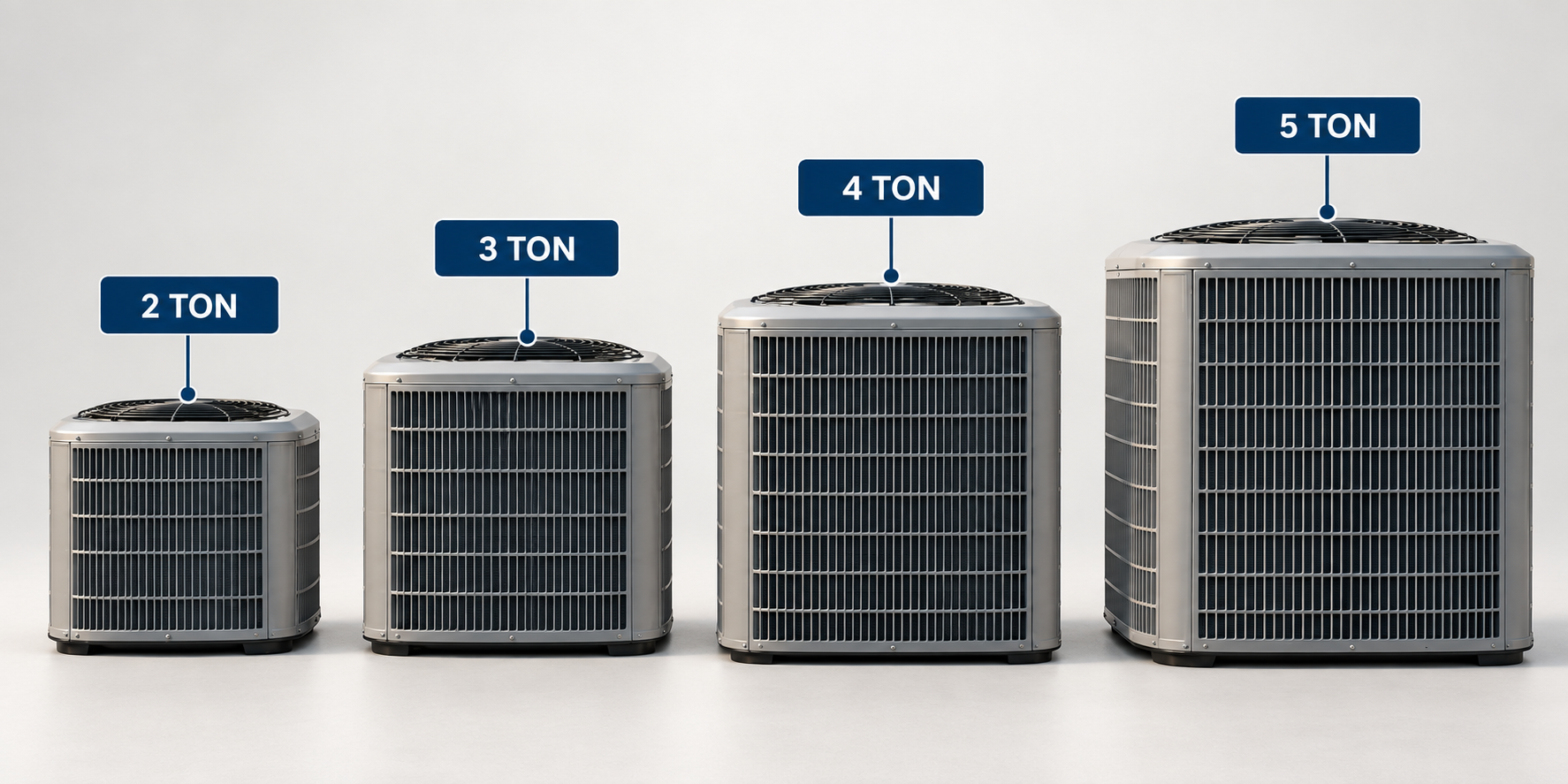
Most single-family homes in Cherry Hill need between 2 and 5 tons of cooling, but square footage alone can’t tell you which one belongs in your house. Correct air conditioner sizing comes from a Manual J load calculation: a room-by-room measurement of how much heat your home gains on a hot, humid South Jersey afternoon.
At Fresh Air Flow, our NATE-certified technicians run that calculation before every AC replacement we quote in Camden and Burlington counties. Here’s what goes into it, and why the shortcuts you’ll find online usually miss.
Key Takeaways
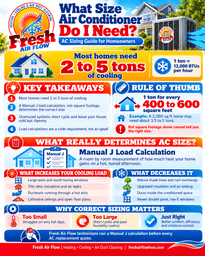
- One ton of cooling equals 12,000 BTUs per hour; most Cherry Hill homes need 2 to 5 tons
- A Manual J load calculation, not square footage, determines the correct size
- Oversized systems short-cycle and leave your house cold but clammy
- Load calculations are a code requirement, not an upsell
How Many Tons of AC Do I Need?
The rule of thumb is one ton, or 12,000 BTUs per hour, for every 400 to 600 square feet, which puts a 2,000-square-foot home between 3.5 and 5 tons. That spread is a ton and a half of equipment.
When homeowners ask, “How many tons of AC do I need?” they want a number tied to square footage. Two houses of identical size on the same block in Haddonfield can land at opposite ends of that range. Here’s what moves the number:
| What increases your cooling load | What decreases it |
| Large west- and south-facing windows | Mature shade trees and roof overhangs |
| Thin attic insulation and air leaks | Upgraded insulation and air sealing |
| Ductwork running through a hot attic | Ducts inside the conditioned space |
| Cathedral ceilings and open floor plans | Newer double-pane, low-E windows |
What Is a Manual J Load Calculation?
A Manual J load calculation is the HVAC load calculation standard published by the Air Conditioning Contractors of America. Instead of guessing from square footage, it measures your home: wall and window dimensions, orientation, insulation levels, air leakage, ceiling heights, and occupancy. It produces a sensible load (dry heat) and a latent load (humidity), and Manual S matches equipment capacity to those numbers.
This isn’t optional paperwork. New Jersey’s residential code follows the International Residential Code, which requires cooling equipment to be sized under Manual S based on an HVAC load calculation performed per Manual J.
Are Online HVAC Sizing Calculators Accurate?
Not precisely enough to buy equipment on. An HVAC sizing calculator gets you in the neighborhood. A BTU calculator for home use asks for square footage, climate zone, and maybe ceiling height, then returns one number. What it can’t see is the 20-year-old ductwork leaking cooled air into the attic, or the family room with three exposed walls and a wall of west-facing glass.
Use a BTU calculator for home budgeting. Treat any AC sizing guide that never asks about your ducts as a starting point, not a specification.
What Happens If Your AC Is the Wrong Size?
Oversizing is the mistake we find most often, usually because a 4-ton system was replaced with another 4-ton system without checking whether the original was right. An oversized AC satisfies the thermostat in bursts of five to ten minutes, which isn’t long enough to pull moisture out of the air.
The display reads 72 degrees and the house still feels clammy, and around here humidity ruins comfort faster than temperature does. Short cycling also wears out compressors early.
Undersizing is rarer but easier to spot: the system runs nonstop through a 95-degree afternoon and never reaches the setpoint.
How to Size an Air Conditioner for Your Cherry Hill Home
Proper air conditioner sizing starts in your house, not on a spec sheet. A Fresh Air Flow technician spends 30 to 60 minutes measuring rooms and windows, checking attic insulation depth, noting orientation and shading, and inspecting duct runs for leakage.
Ducts matter as much as the equipment outside: a 4-ton condenser attached to ductwork that can only move 3 tons of air will never perform to its rating. That’s how to size an air conditioner correctly — we run the numbers, select equipment with Manual S, and show you where the result differs from what you have now.

FAQs
Can I replace my AC with the same size I have now?
Only if the original was sized correctly, and plenty aren’t. Homes change, too: new windows, added insulation, a finished basement, or a converted attic all shift the load. Size the replacement fresh rather than matching the old nameplate.
Do ductless mini splits need a load calculation too?
Yes, zone by zone. Each indoor head on a ductless mini split system is sized to the room it serves, so a four-zone setup needs four separate load figures plus a matched outdoor unit.
Does a higher SEER2 rating change what size I need?
No. Efficiency and capacity are separate specifications. A 17 SEER2 and a 14 SEER2 system of the same tonnage move the same heat; the more efficient one uses less electricity doing it.
What size AC does a two-story Cherry Hill home need?
Often the answer isn’t a bigger unit. Second floors gain far more heat than first floors, so one oversized system freezes the downstairs while bedrooms stay warm. Zoning or a ductless head upstairs usually beats added tonnage.
Get the Right-Sized System for Your Cherry Hill Home
If you’re planning a replacement and still asking, “What size air conditioner do I need?” we’ll answer it with measurements instead of guesswork. No online AC sizing guide replaces someone walking your house with a tape measure.
Fresh Air Flow is a Carrier Factory Authorized Dealer serving Cherry Hill and communities across Camden and Burlington counties, with same-day service whenever possible, financing options, and a 100% satisfaction guarantee behind every install. Schedule your in-home evaluation to get an exact number for your home.