Your Guide to Different Types of Home Air Conditioning Systems
If you’re a homeowner in South Jersey trying to figure out which air conditioning system is right for your home, you’re not alone.
Fresh Air Flow has spent years helping homeowners across Cherry Hill, Marlton, Haddonfield, and the surrounding communities make decisions about their cooling systems. This guide breaks down every major type of home air conditioning system, explains how each one works, and helps you understand which option makes the most sense for your home and budget.
TL;DR
The right type of home air conditioning system for you depends on your property’s layout, existing ductwork, budget, and comfort goals. Central air is the most common choice for whole-home cooling in South Jersey, while ductless mini splits are ideal for homes without ductwork or for room-by-room control.
Key Takeaways
- Common HVAC system types for South Jersey homes are central air conditioners, ductless mini splits, and heat pumps
- HVAC system cost varies widely based on the type, size, efficiency rating, and whether ductwork modifications are needed
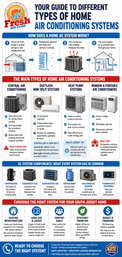
How Does a Home AC System Work?
Every air conditioning system operates on the same refrigeration principle:
- Warm air from inside your home is pulled across a cold evaporator coil
- Refrigerant absorbs the heat from that air and carries it outside
- The condenser unit outside releases the heat into the outdoor air
- The now-cooled air is pushed back through your home
What changes between system types is how that cooled air is distributed, where the equipment is installed, and how you control it in different areas of your home.
The Main Types of Home Air Conditioning Systems
Central Air Conditioning Systems
Central air is the most widely used home cooling system in South Jersey, and for good reason.
How it works: A central AC system uses an outdoor condenser unit paired with an indoor air handler or furnace. The air handler pushes cooled air through your ductwork and out through supply vents in each room. Return vents pull warm air back into the system to be cooled again.
Central air is a good fit when:
- Your home already has existing ductwork in good condition
- You want consistent, whole-home cooling on one thermostat
- You’re replacing an older system and the infrastructure is already in place
What to watch for: If your ductwork is leaking, improperly sized, or in poor condition, central air won’t perform the way it should. During every air conditioner installation, our team inspects the existing duct system and flags any issues before they become problems.
Ductless Mini Split Systems
Ductless mini splits are one of the fastest-growing home cooling systems on the market, and Fresh Air Flow was one of the first companies to introduce them to the Cherry Hill area. We’ve been installing and servicing them longer than most, which means we understand their strengths and limitations better than anyone.
How it works: A ductless mini split consists of an outdoor compressor unit connected to one or more indoor air-handling units mounted on walls or ceilings. Each indoor unit conditions the air in its specific zone without any ductwork required.
Ductless mini splits are a great fit when:
- Your home doesn’t have existing ductwork
- You want independent temperature control in different rooms or zones
- You’re finishing a basement, garage, or home addition
- You want to supplement an existing central air system in a hard-to-reach area
Central air vs. mini split: Central air wins on whole-home coverage from a single thermostat. Mini splits win on flexibility, efficiency, and zoned comfort, particularly in homes where ductwork isn’t feasible or where every person in the household prefers a different temperature.
Ductless vs. central air conditioning efficiency: Mini splits don’t lose energy through duct leakage. For rooms that are difficult to condition, mini splits are a more efficient and cost-effective choice.
Heat Pump Systems
Heat pumps are incredibly versatile and increasingly popular in South Jersey’s climate.
How it works: A heat pump uses the same refrigeration cycle as an air conditioner but can run in reverse. In summer, it moves heat from inside your home to outside. In winter, it extracts heat from the outdoor air and brings it inside to warm your home.
Heat pumps are a great fit when:
- You want one system to handle year-round comfort
- You’re replacing both a furnace and an air conditioner at the same time
- You want high energy efficiency without sacrificing comfort
- You’re interested in reducing your dependence on fossil fuels
What to know for South Jersey homeowners: Heat pumps perform well in moderate climates like ours. While they maintain efficiency even when outdoor temperatures drop into the low teens, many homeowners pair a heat pump with a gas backup for the coldest winter days.
Window and Portable Air Conditioners
Window units are installed in a window opening and cool a single room. They’re affordable upfront but inefficient, loud, and ineffective for whole-home comfort. Portable air conditioners sit on the floor and vent through a window. They’re less efficient than window units and require constant draining.
When they make sense: You need temporary cooling in a room that can’t be reached by your central system, or you live in a rental property where a permanent system isn’t feasible.
What we see in the field: Homeowners often turn to window units as a band-aid solution when their central system can’t keep up. In most cases, the underlying issue is an undersized unit, ductwork problems, or a unit that’s past its useful lifespan.
AC System Components: What Every System Has in Common
Regardless of which cooling system you choose, these core components work together to move heat out of your home:
- Compressor – The heart of the system. Pressurizes refrigerant and drives the cooling cycle.
- Condenser Coil – Located in the outdoor unit. Releases heat from inside into the outdoor air.
- Evaporator Coil – Located in the indoor unit. Absorbs indoor heat and transfers it to the refrigerant.
- Refrigerant – Carries heat from inside to outside.
- Air Handler/Blower – Circulates conditioned air through your home.
- Thermostat/Controls – Sets your desired temperature.
Choosing the Right System for Your South Jersey Home
These are the factors the Fresh Air Flow team evaluates before recommending a new AC installation:
- Existing Infrastructure: Does your home have ductwork? Can it handle the airflow requirements of a new system? Ductwork problems are one of the most common issues we uncover during pre-installation evaluations in older South Jersey homes.
- Home Size and Layout: A larger home with multiple floors may benefit from a zoned system. A smaller ranch-style home may be perfectly served by a single central unit.
- Comfort Goals: Do you want every person in the household to control their own zone? Or is consistent whole-home temperature more important? This single factor often drives the central air vs. mini split decision.
- Efficiency Priorities: Higher-efficiency systems cost more upfront but reduce monthly energy bills. Carrier’s Infinity series, for example, delivers some of the highest SEER2 ratings available and qualifies for rebate programs we can help you take advantage of.
- Budget and Financing: Fresh Air Flow offers 0% financing options and works with available rebate and promotion programs to make the right system accessible.

FAQs
What is the most energy-efficient type of home air conditioning system?
Ductless mini splits and modern heat pumps are generally the most energy-efficient options available. Mini splits eliminate duct loss. Heat pumps move heat rather than generating it. That said, a high-efficiency central air system can also deliver excellent efficiency ratings when paired with well-maintained ductwork.
How long does an air conditioner installation take?
A standard central air conditioner replacement in a South Jersey home typically takes one full day. Ductless mini split installations for a single zone can often be completed in a half day. Multi-zone mini split systems or installations requiring new ductwork may take two to three days.
What is the average HVAC system cost for a new installation?
Cost varies based on the type of system, efficiency tier, home size, and complexity of the installation. For an exact estimate, call Fresh Air Flow for a free quote.
What is the difference between ductless and central air conditioning?
Central air conditioning uses ductwork to distribute conditioned air from a central system. Ductless mini split systems connect an outdoor compressor to one or more indoor units without any ductwork. Central air is better for whole-home coverage on a single thermostat, while ductless mini splits offer room-by-room temperature control and better efficiency in homes without ductwork.
Ready to Choose the Right System? We’re Here to Help!
Understanding the types of home air conditioning systems is the first step. The next step is getting an evaluation from a team that will be honest with you about what your home needs.
Fresh Air Flow has been helping Cherry Hill and South Jersey homeowners make informed HVAC decisions for years. Whether you’re replacing an aging system, upgrading to a more efficient option, or cooling a new addition, our NATE-certified team will evaluate your home, explain your options, and back every installation with industry-leading warranties. Call today!